George El-Hage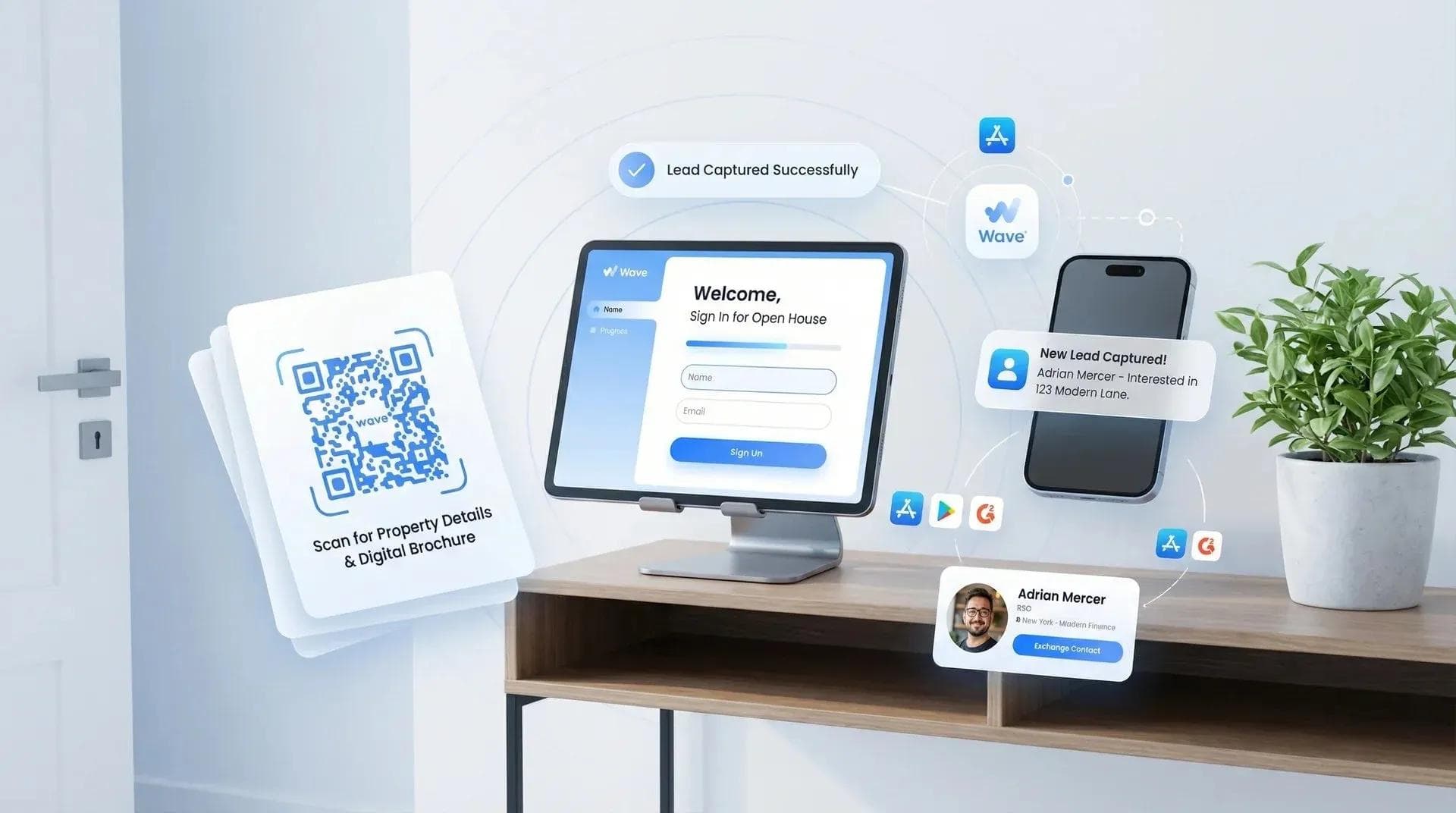
Real estate open house lead capture is the single biggest gap I see in agents' pipelines. You get 30, 40, sometimes 50 people walking through a property on a Saturday - and somehow half of them leave without giving you a name or email. That's not a traffic problem. That's a capture problem.
I've helped real estate teams through Wave Connect for Teams modernize how they collect and follow up with contacts, and the pattern is always the same: the agents who fix their sign-in process end up with 2-3x more usable leads from the same foot traffic. This guide covers the practical ideas that actually move the needle.
The best open house lead capture strategy combines a digital sign-in method (tablet, QR code, or NFC card) with a structured 7-day follow-up sequence. Paper sign-in sheets lose 30-40% of contact data to illegible handwriting and incomplete entries. Switching to a digital capture tool and following up within 2 hours of the open house consistently produces the highest conversion rates for real estate agents.
- Why leads slip away: The real reasons open house visitors don't convert into pipeline
- Paper vs. digital sign-in: The hidden costs of sticking with clipboards
- 7 modern capture ideas: From QR codes to NFC cards to text-to-register
- Station setup: What a high-converting sign-in table actually looks like
- Follow-up sequence: A day-by-day plan that turns visitors into clients
- Neighbour leads: How to turn curious neighbours into your next listing
Why Open House Leads Slip Through the Cracks
Most real estate agents capture fewer than 30% of open house visitors as usable leads, and the biggest culprit is the gap between foot traffic and a reliable sign-in process. People walk in, look around, chat with you for five minutes, and then walk right out the front door. You never got their name. You definitely don't have their email. And now that potential buyer is gone.
I've talked to hundreds of agents about this exact problem. The complaint is always the same - "I get the traffic, but I lose the lead before follow-up even starts." And honestly? It makes sense. Most open house setups aren't designed for capture. They're designed for hospitality. Cookies on the counter, flyers on the table, maybe a clipboard by the door that half the visitors walk right past. 🏡 The fix is usually the same too: swapping the clipboard for Wave Connect's event lead capture platform so every visitor's details are captured automatically, no illegible handwriting required.
Here's what's actually happening: every uncaptured visitor is a lost pipeline opportunity. That person might be a serious buyer, a curious neighbour who's thinking about selling, or someone who'll refer you to a friend next month. If you don't get their contact info, you can't follow up. And if you can't follow up, that open house was basically just a free tour.
💡 From My Experience: One brokerage I worked with ran the numbers on a typical Saturday open house. 45 visitors walked through. The paper sign-in sheet captured 18 names. Of those, 6 had illegible emails. So they went from 45 opportunities to 12 usable contacts. That's a 73% loss rate - and it's more common than you'd think.
The Paper Sign-In Sheet Problem (And Why It Still Exists)
Paper sign-in sheets remain the default at most open houses because they're cheap, familiar, and feel low-risk - but the hidden costs are significant. After the event, you're spending 15-30 minutes manually typing names and emails into your CRM. And that's if you can even read the handwriting.
Studies from real estate coaching organizations suggest that 30-40% of handwritten contact info contains errors - wrong digits in phone numbers, illegible email addresses, missing last names. That's not a minor issue. That's a third of your leads gone before you even start follow-up.
But here's the thing people don't talk about: there's also a psychological friction problem. Visitors walk in, see a clipboard, and immediately feel like they're being surveilled. "Why do they need my phone number just to look at a house?" So they skip it, scribble fake info, or fill in just their first name. Car dealerships have made the same switch for exactly this reason - the clipboard creates resistance. 😬
The fix isn't complicated. You just need to make the sign-in feel like a value exchange instead of a data grab. And that starts with the tools you're using.
7 Modern Open House Lead Capture Ideas
The best open house lead generation strategies combine low-friction digital tools with a clear value exchange - visitors give you their info because they're getting something useful back. Here are seven ideas that actually work, ranked by how easy they are to set up.
1. Digital sign-in on a tablet
Set up a tablet (iPad or Android) at the entry table with a simple form - name, email, phone. That's it. Visitors tap their info instead of writing it, which means zero illegible handwriting, zero manual data entry for you, and the contacts sync straight to your CRM. Apps like Curb Hero and Open Home Pro are built for this. Takes about 10 minutes to set up before the open house.
2. QR code at the sign-in station
Print a QR code on a small stand next to the sign-in table. Visitors scan it with their phone camera and land on a quick form. This works especially well for visitors who don't want to touch a shared device (still a thing after COVID). You can create a free QR form with Google Forms or Typeform in about 5 minutes.
3. NFC tap-to-share your contact card
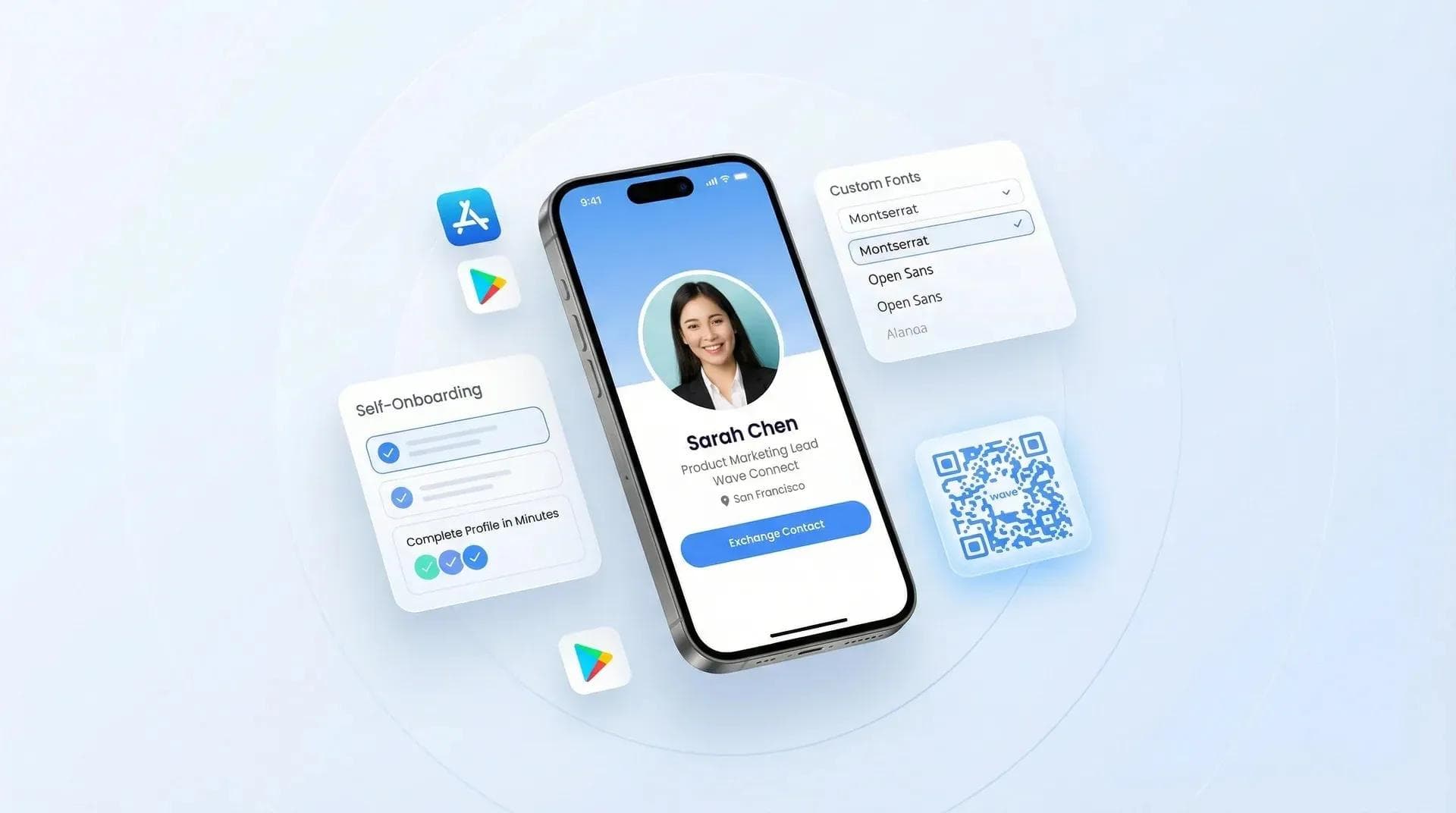
This is the one I'm most excited about. Carry an NFC-enabled digital business card for realtors, and when you're chatting with a visitor, just tap your card to their phone. They instantly get your full contact info - phone, email, listing links, social profiles. One tap, saved to their phone. No app needed on their end.
This is exactly what platforms like Wave Connect are built for. You tap your card, the visitor gets your full profile, and their contact captures back to your dashboard. The agents I've worked with who switched to NFC cards report capturing significantly more contacts per open house because the exchange happens naturally during conversation, not at a sign-in table people are trying to avoid.
4. QR code on property flyers and brochures
Embed a QR code on every printed piece you hand out at the open house. Visitors who take a flyer home can scan it later and land on your contact page or a property listing with your info. This captures leads after the event - people who weren't ready to commit during the open house but are still interested. Best real estate business cards now include QR codes for this exact reason.
5. Text-to-register entry
Post a sign at the door: "Text OPEN to [your number] to check in and get the full property details." This captures phone numbers with basically zero friction. The visitor texts you, your auto-responder sends back the listing details, and now you have a direct line to them. Services like EZTexting or SimpleTexting make this straightforward to set up.
6. Social media check-in incentive
Offer a giveaway entry (a gift card to a local restaurant works great) for visitors who check in on Instagram or tag the property listing. You capture social handles, create user-generated content for the listing, and the social proof attracts more visitors to your next open house. Two birds. 📱
7. Neighbourhood-specific landing page
Create a simple page with recent comparable sales, neighbourhood stats, school ratings, and a contact form. Share the URL via QR code or tablet at the open house. This one's especially powerful for converting neighbour visitors into seller leads - they're curious about their home's value, and this page gives them exactly what they want.
Industries across the board are adopting digital lead capture. Insurance agents using digital cards and digital business cards for sales teams are seeing the same pattern - the easier you make the exchange, the more contacts you collect.
How to Set Up Your Open House Lead Capture Station
A high-converting open house sign-in station has four components: a tablet or QR stand, a printed QR backup, your NFC digital business card, and a simple greeting script that frames sign-in as a value exchange. Here's how to set it up.
Table placement matters. Put your sign-in station right inside the front door - not off to the side, not in the kitchen. The first thing visitors should see when they walk in is your welcome station. Angle the tablet toward them so it's ready to go.
Your setup should include:
- A tablet with a digital sign-in form (name, email, phone - that's it)
- A printed QR code on a small acrylic stand as a backup
- Your NFC business card on your person for one-on-one conversations
- Property flyers with QR codes visitors can take home
Wi-Fi contingency: Always have an offline-capable form loaded or a paper backup. If the Wi-Fi drops mid-open house, you don't want to lose an hour of leads. Most tablet sign-in apps store data locally and sync when connection returns.
💡 From My Experience: The greeting script makes all the difference. Don't say "Please sign in." Say: "Before you explore, scan this QR code - it'll send you the full property details, neighbourhood comps, and my contact card right to your phone." Now you've turned sign-in into a gift, not a demand. The agents who use this framing consistently capture over twice as many contacts. It's about digital business cards for events - same psychology, different setting.
The 7-Day Follow-Up Sequence That Converts
The single most important factor in converting open house leads is follow-up speed - contacting a visitor within 2 hours produces dramatically better results than waiting even 24 hours. Here's the exact sequence I recommend to the real estate teams I work with.
Day 0 (same day, within 2 hours): Send a personalized text. "Hey [Name], great meeting you at [address] today! Here's the full listing info: [link]. Let me know if you have any questions - happy to set up a private showing."
Day 1: Email with property details, neighbourhood comps, and a soft CTA to schedule a private showing. Include 2-3 photos they might not have seen during the open house.
Day 3: "Still thinking about [address]?" email with a new angle. School ratings, commute times to major employers, or a neighbourhood highlight they might care about. Something fresh, not a repeat of day 1.
Day 7: Soft check-in plus a pivot. "If [address] wasn't the right fit, I have two similar listings coming to market this week. Want me to send you details?" This keeps the relationship alive even if that specific property wasn't their match. For more detail on post-event outreach, check out how to follow up after an event.
Segment by visitor type. This is the part most agents miss. A buyer lead and a neighbour lead need completely different follow-up sequences. Buyers get listing-focused content. Neighbours get market reports and comparable sales data. If you dump everyone into the same drip campaign, your messaging won't resonate with either group. 🎯
CRM automation tip: Set up a lead source tag like "open house - [address]" so your drip campaigns trigger automatically based on where the lead came from. Most CRMs (Follow Up Boss, KV Core, even HubSpot's free CRM) support this kind of source-based automation.
💡 From My Experience: A team in Dallas I worked with tested two approaches side by side. Half their agents followed up within 2 hours with a personalized text. The other half waited until Monday morning. The same-day group booked 4x more private showings from the same open house traffic. Speed isn't just important - it's the whole game.
Capturing Neighbour Leads (Your Hidden Seller Pipeline)
Neighbours who visit your open house are potential seller leads disguised as curious onlookers, and they represent some of the highest-value contacts you'll capture all day. They're not there to buy the house. They're there to see what homes in their neighbourhood are selling for - which means they're already thinking about their own home's value.
Here's how to identify them early: ask a simple question during your greeting. "Are you from the neighbourhood?" It's natural, non-pushy, and immediately tells you how to categorize them.
The follow-up is completely different from buyer leads. Don't send them listing alerts. Instead, send monthly market reports, recent comp data for their street, and insights on neighbourhood price trends. Position yourself as the local expert - the agent who knows their block better than anyone.
This is a long game. Neighbours who see your professionalism at an open house today become listings 6-12 months from now. When they're finally ready to sell, you're the agent they already know. You've been sending them useful data. You showed up well at that open house. That's how you win listings without cold calling. According to NAR research, the majority of sellers choose agents they already know or were referred to - and open houses are one of the strongest in-person touchpoints you can create.
Frequently Asked Questions
What is the best open house sign-in method?
A digital sign-in on a tablet or QR code form captures the cleanest data and integrates directly with your CRM. It eliminates handwriting errors and cuts post-event data entry to zero.
How do I get visitors to actually sign in at an open house?
Frame it as a value exchange, not a data grab. Say "Sign in to get the full property details and neighbourhood report sent to your phone" instead of just "Please sign in."
Should I still use paper sign-in sheets at open houses?
Keep paper as a backup, but lead with digital tools. Digital sign-in captures more complete info, reduces data entry, and enables same-day follow-up.
How soon should I follow up after an open house?
Within 2 hours. Send a personalized text while the visit is still fresh - waiting until Monday morning drops your conversion rate significantly.
How do I convert neighbour visitors into seller leads?
Don't pitch them on buying. Follow up with monthly market reports and comparable sales data, and position yourself as the neighbourhood expert they'll call when they're ready to list.
What is a digital sign-in sheet for an open house?
It's a tablet-based or QR-code-based form that replaces the paper clipboard. Visitors enter their info digitally, and it syncs to your CRM automatically with zero manual data entry.
How many leads should I expect from an open house?
With a solid digital capture setup, you should convert 50-70% of visitors into usable leads. Without one, most agents capture fewer than 30%.
Ready to Capture More Leads at Your Next Open House?
If your team is still relying on paper sign-in sheets, it might be time to see how a digital business card platform handles lead capture at scale. NFC tap-to-share, QR codes, CRM sync - all from one dashboard where you manage your team's digital business cards.
Explore Wave for TeamsAbout the Author: George El-Hage is the Founder of Wave Connect, an event lead capture platform with a full digital business card built in, serving 200,000+ professionals worldwide. With 6+ years helping organizations transition from paper to digital networking, George has worked with real estate teams, sales organizations, and enterprise companies on modernizing their lead capture and contact sharing. Connect with George on LinkedIn.