George El-Hage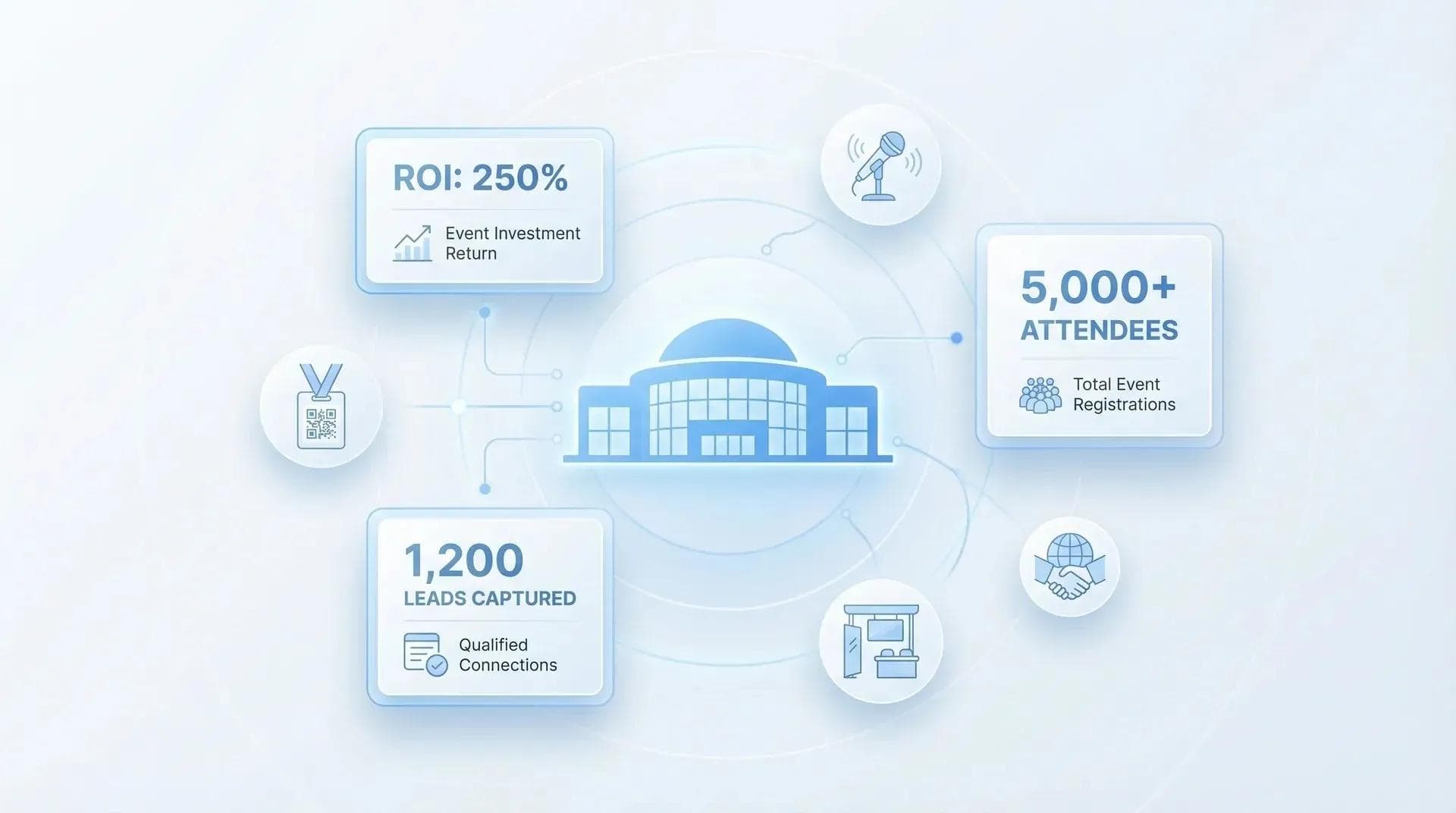
Event marketing statistics tell a clear story in 2026: live events are back, budgets are climbing, and the companies that figure out lead capture are the ones turning attendance into revenue. But the data also reveals a massive gap between showing up and actually closing deals.
I put together 60+ sourced stats covering everything from market size and ROI to attendee behavior, AI adoption, and the lead capture problem that keeps event marketers up at night. Whether you're building a case for your next event budget or figuring out how to equip your team for an upcoming conference, this page has the numbers you need. I update it monthly as new reports come in.
The global events industry is worth $2.33 trillion in 2026, and 67% of event professionals expect increased spending this year. Event marketing delivers strong ROI - $20.98 for every $1 spent at trade shows - but 94% of marketers say their company fails to convert event leads into opportunities. The gap between capturing a lead and closing a deal is where most event ROI leaks. Below are 60+ sourced statistics on budgets, ROI, attendee behavior, lead capture, AI, sponsorships, and sustainability. This is exactly the gap a dedicated event lead capture platform is built to close.
- Market size: How big the events industry really is and where it's headed through 2032
- Budgets and spending: What event marketers are actually allocating in 2026
- ROI data: The real returns on event marketing - and why so many companies fail to capture them
- Lead capture gap: Why 94% of companies lose event leads and what the data says about fixing it
- Emerging trends: AI adoption, sponsorship shifts, sustainability pressure, and the micro-event movement
Top Event Marketing Statistics at a Glance
The event marketing industry is surging back with record budgets, but lead conversion remains the #1 bottleneck. Here are the 20 headline stats you need to know for 2026. Every figure is sourced below with full context in the detailed sections that follow.
| Statistic | Source | Year |
|---|---|---|
| Global events industry worth $2.33 trillion | Statista | 2026 |
| 67% of event pros expect increased meeting spend | American Express GBT | 2026 |
| $20.98 ROI for every $1 spent at trade shows | CEIR | 2025 |
| 97.4% rate in-person events as important | EventsAir | 2026 |
| 94% of marketers fail to convert event leads | Certain | 2025 |
| 13,000+ trade shows held annually in the US | CEIR | 2025 |
| 95% of organizers expect AI use at events to increase | Bizzabo | 2026 |
| 81% of trade show attendees have buying authority | CEIR | 2025 |
| 52% of leaders say trade shows deliver greatest ROI | CEIR | 2025 |
| Only 47% of exhibitors track leads through the sales cycle | Exhibit Surveys | 2025 |
| Average cost per lead at events: $112 | Exhibit Surveys | 2025 |
| 86.4% of organizers maintaining or increasing in-person events | Bizzabo | 2026 |
| 75% of organizers reported 5%+ sponsorship revenue growth | UFI | 2025 |
| 92% of attendees are looking for new products | CEIR | 2025 |
| US events market: $466 billion (projected $651B by 2032) | Fortune Business Insights | 2025 |
| 80% of people prefer in-person events over virtual | Freeman | 2025 |
| 92% of exhibitors plan to be more sustainable | Explori | 2025 |
| Average 52% attendance rate from registrations | Bizzabo | 2026 |
| 72% of planners believe AI is valuable or essential | EventsAir | 2026 |
| 600,000 tons of trade show trash per year in the US | EPA / Trade Show News Network | 2025 |
Sources verified as of February 2026. I update this table monthly as new industry reports are released.
Event Industry Market Size and Growth
The global events industry is valued at $2.33 trillion in 2026, making it one of the largest sectors in the world economy. That number spans everything from corporate conferences and trade shows to music festivals and sporting events. The event marketing slice of that pie - the B2B portion focused on lead generation, brand awareness, and customer engagement - is projected to hit $36.31 billion on its own. Here's how the numbers break down.
- $2.33 trillion - Global events industry market size in 2026. (Statista, 2026)
- $36.31 billion - Projected value of the event marketing industry specifically. (Daedal Research, 2025)
- $466 billion - US events market size in 2025, projected to reach $651.53 billion by 2032. (Fortune Business Insights, 2025)
- 13,000+ - Annual trade shows held in the United States alone. (CEIR, 2025)
- 13% annual growth - Asia-Pacific is the fastest-growing regional events market. (Daedal Research, 2025)
- 28% - Share of the total events market made up by corporate events. (Statista, 2026)
- 5.6% - Compound annual growth rate (CAGR) for the global event management software market through 2030. (Grand View Research, 2025)
- $1.03 trillion - North America's share of the global events industry. (Statista, 2026)
For a deeper look at the trade show segment specifically, check out our trade show statistics breakdown, which covers exhibitor costs, booth economics, and attendance trends.
Event Marketing Budget and Spending Statistics
Event budgets are expanding in 2026, with 67% of event professionals expecting increased meeting spend this year. After several years of pandemic-era belt-tightening, most organizations are treating events as a growth channel again - not a cost center. But rising costs for venues, travel, and production mean every dollar needs to work harder. If you're building an event marketing plan template, these budget benchmarks will help anchor your numbers.
- 67% of event professionals expect increased meeting spend in 2026. (American Express GBT, 2026)
- 40% of organizers expect event budgets to grow; 40% flat; 20% decrease. (Bizzabo, 2026)
- 31.6% - Average share of total marketing budget allocated to trade shows and events. (CEIR, 2025)
- 86.4% of event organizers plan to maintain or increase in-person events. (Bizzabo, 2026)
- 34% of event marketers reported increased exhibit-marketing budgets year-over-year. (EXHIBITOR Magazine, 2025)
- $10,000-$30,000 - Average exhibition cost per show for a mid-size exhibitor (includes booth, travel, logistics). (EXHIBITOR Magazine, 2025)
- 72% of event professionals expect costs to rise by up to 20% compared to 2025. (EventsAir, 2026)
- 24% of marketing budgets now go to events - the highest single-channel allocation. (HubSpot State of Marketing, 2026)
- $300+ - Average cost per attendee for corporate conferences. (American Express GBT, 2026)
📊 From My Experience: I've helped teams prepare for 50+ conferences since 2020, and the biggest budget surprise is always the hidden costs - not the booth itself but the follow-up process afterward. Teams spend $15,000-$25,000 getting to a show and then lose half their leads because they don't have a system to capture and follow up. The ROI problem isn't the event. It's what happens after.
Event Marketing ROI Statistics
Trade shows deliver an average of $20.98 for every $1 spent, and 52% of business leaders say events provide the greatest ROI among all marketing channels. That's a strong headline number. But dig into the data and you'll see a split: companies with good lead capture systems see massive returns, while companies without them struggle to prove events worked at all. The ROI gap isn't about the events - it's about execution.
- 52% of business leaders say trade shows and events provide the greatest ROI versus other marketing channels. (CEIR, 2025)
- $20.98 average ROI for every $1 spent on trade shows. (CEIR, 2025)
- 14% of Fortune 500 companies report 5:1 or better ROI from exhibiting at trade shows. (CEIR, 2025)
- 86% of B2B organizations reported positive ROI within 7 months of hosting hybrid events. (ON24, 2025)
- 40% of organizers still report difficulty proving event ROI - down from 70% in 2023. (Bizzabo, 2026)
- $112 - Average cost per lead at trade shows, compared to $259 for field sales calls. (Exhibit Surveys, 2025)
- 47% of in-person event marketers say in-person has the highest ROI of any marketing channel. (Splash, 2025)
- 24.4% conversion rate for dynamic registration flows versus 11.6% for static forms. (Bizzabo, 2026)
- 3x higher pipeline value for companies that follow up within 24 hours of an event versus those that wait a week or more. (Exhibit Surveys, 2025)
That last stat is worth sitting with. A 3x difference based purely on follow-up speed. It's not about whether events work - it's about whether you're set up to capture the value.
In-Person vs Virtual vs Hybrid Event Statistics
In-person events dominate in 2026: 97.4% of event professionals rate them as important to their strategy, and 80% of attendees prefer in-person over virtual. Virtual events haven't disappeared - they've found their lane for webinars, training, and global reach. But the hybrid model is evolving into something more intentional, with organizers designing separate tracks for in-person and virtual audiences instead of trying to make one experience serve both. 🎟️
- 97.4% of event professionals rate in-person events as important or very important to their strategy. (EventsAir, 2026)
- 80% of people prefer in-person events over virtual. (Freeman, 2025)
- 97% of marketers feel effective at running in-person events, but only 12% feel very effective at virtual events. (Splash, 2025)
- 81% of event managers are still hosting virtual events in some capacity. (Bizzabo, 2026)
- 58% of organizers plan to host more small in-person events (under 200 attendees) in 2026. (Eventex, 2026)
- Micro-events (under 100 attendees) identified as a key format trend for 2026, with higher engagement scores and lower cost-per-conversion. (Eventex, 2026)
- 43% of virtual event attendees say they multi-task during sessions. (ON24, 2025)
- 67% of organizers say hybrid events cost 20-30% more than in-person only. (EventsAir, 2026)
That micro-event trend is real. I'm seeing it firsthand - smaller conferences where everyone actually talks to each other, instead of 5,000-person expos where you just collect badge scans and hope for the best. If your team's attending career fairs and job expos in 2026, the same principle applies: focused attendance beats volume.
Attendee Behavior and Engagement Statistics
The average organization attends 25 events per year, with a 52% attendance rate from registrations - meaning almost half the people who sign up don't show. For the ones who do show up, the data paints a picture of highly motivated buyers: 92% are looking for new products, and 81% have buying authority. The challenge isn't getting the right people in the room. It's engaging them once they're there.
- 25 events per organization per year on average. (Bizzabo, 2026)
- 412 registrations per event on average; 269 attendees; 52% attendance rate. (Bizzabo, 2026)
- 73% of attendees expect modern event technology (apps, digital check-in, contactless sharing) at conferences. (Freeman, 2025)
- 55% say a mobile event app can make or break their experience. (Freeman, 2025)
- 56% of trade show attendees travel more than 400 miles to attend. (CEIR, 2025)
- 92% of trade show attendees say they're looking for new products. (CEIR, 2025)
- 81% of trade show attendees have buying authority. (CEIR, 2025)
- 74% of event professionals identify attendee engagement as the #1 success factor. (EventsAir, 2026)
- 39% of event professionals cite engagement as their top challenge (it's both the goal and the problem). (Bizzabo, 2026)
- 2.5 days - Average length of attended conferences. (American Express GBT, 2026)
Check out the broader networking statistics for more context on how professionals are connecting at events and beyond.
Lead Capture and Contact Exchange at Events
Lead generation is the #1 reason exhibitors attend trade shows (72%), yet 94% of marketers believe their company fails to convert event leads into opportunities. That gap is staggering. The data tells us that events produce cheap leads ($112 per lead vs. $259 for field sales) with highly qualified buyers (81% have buying authority). But the handoff from "met at a booth" to "closed a deal" is where most companies lose the thread. Only 47% even track leads through the sales cycle. 🔥
- $112 - Average cost per lead at trade shows, versus $259 for field sales calls and $332 for telemarketing. (Exhibit Surveys, 2025)
- #2 most effective lead generation tactic - trade shows rank second only to company websites. (Content Marketing Institute, 2025)
- 72% of exhibitors say lead generation is their primary reason for attending trade shows. (CEIR, 2025)
- 93% of exhibitors say quality of leads is the most important outcome from events. (Exhibit Surveys, 2025)
- Less than 70% of exhibitors have a formal lead follow-up plan. (Exhibit Surveys, 2025)
- Only 47% of exhibitors track leads through the sales cycle. (Exhibit Surveys, 2025)
- 94% of marketers believe their company fails to convert event leads into opportunities. (Certain, 2025)
- 3.5 - Average number of sales calls needed to close a trade show lead (compared to 8+ for cold calls). (CEIR, 2025)
- 10% conversion rate with proper follow-up within 48 hours. (Exhibit Surveys, 2025)
- 59% of attendees make a purchase decision within 3 months of an event. (CEIR, 2025)
- 44% of attendees follow up with a vendor after the event on their own initiative. (CEIR, 2025)
- 80% of trade show leads are never followed up on by sales teams. (Exhibit Surveys, 2025)
If you're preparing for a trade show, these numbers should reframe your priorities. The booth design, the giveaways, the banner graphics - none of it matters if you don't have a lead capture and follow-up system locked in before you get there. And I don't just mean a fishbowl for business cards.
💡 From My Experience: At SaaS conferences I've attended, the teams that exchange contacts digitally - whether it's digital business cards for events, badge scanning, or QR codes - follow up 2-3x faster than teams still manually entering info from paper cards after the show. Speed is the variable that separates a $112 lead from a dead one.
Event Technology and AI Statistics
95% of event organizers expect AI use in events to increase over the next year, and 72% of planners already believe AI is valuable or essential to their workflow. AI isn't replacing event planners - it's handling the repetitive stuff (email sequences, matchmaking, session recommendations) so planners can focus on the parts that require human judgment. The tech stack for events is also consolidating: 79% of organizers now integrate their event platform with CRM or marketing automation.
- 95% of organizers expect AI use in events to increase. (Bizzabo, 2026)
- 35% anticipate significant AI increases (not just incremental). (Bizzabo, 2026)
- 72% of planners believe AI is valuable or essential. (EventsAir, 2026)
- 62% of organizers are using AI for event marketing (email copy, social content, ad targeting). (Bizzabo, 2026)
- 38% using AI for data analysis and reporting. (Bizzabo, 2026)
- 79% of organizers have their event platform integrated with CRM or marketing automation. (Bizzabo, 2026)
- 64% of organizers plan to change their event management software vendor in the next 12 months. (EventsAir, 2026)
- 46% of event tech budgets are now allocated to attendee engagement tools (up from 31% in 2024). (EventsAir, 2026)
That 64% vendor-switching stat says a lot. Event tech is still a fragmented market, and organizers are shopping for platforms that combine registration, lead capture, CRM sync, and analytics in one place instead of stitching together five different tools.
Event Sponsorship Statistics
Sponsorship revenue was the fastest-growing revenue stream for event organizers in 2025: 75% reported 5% or more growth year-over-year. The sponsorship model is also evolving. Non-booth revenue (sponsored content, breakout sessions, digital placements) now accounts for 23.1% of total event sales - up 33% since 2022. Exhibitors are spending more, but they want more creative activation formats beyond the traditional 10x10 booth.
- 75% of organizers reported 5%+ sponsorship revenue growth in 2025. (UFI Global Exhibition Barometer, 2025)
- 23.1% of total event sales now come from non-booth revenue (sponsored sessions, digital placements, content sponsorships) - a 33% increase since 2022. (Bear Analytics, 2025)
- 11% increase in exhibitor revenue even with relatively flat exhibitor counts - meaning exhibitors are spending more per event. (Bear Analytics, 2025)
- 43% of exhibitors now prefer offsite activities (dinners, networking events, private demos) over traditional booth exhibiting. (UFI, 2025)
- 75% of exhibitors rate the value of their event program as excellent or good - up from 67% in 2023. (CEIR, 2025)
- 1 in 3 exhibitors anticipate increasing their event budgets in 2026, a 10-point rise year-over-year. (CEIR, 2025)
- $1.8 billion - Estimated B2B event sponsorship spend in North America in 2025. (IEG Sponsorship Report, 2025)
Event Sustainability Statistics
92% of businesses plan to be more sustainable when exhibiting, but the industry still generates 600,000 tons of trash per year in the US alone. There's a big gap between intention and action. The numbers on waste are hard to ignore, and they're driving real changes in booth design, material sourcing, and digital alternatives to printed collateral. ♻️
- 92% of businesses plan to be more sustainable when exhibiting. (Explori, 2025)
- 600,000 tons of trash generated by trade shows per year in the United States. (EPA / Trade Show News Network, 2025)
- 4.5 pounds - Average waste generated per attendee per day at trade shows. (EPA, 2025)
- 60% of trade show booth materials end up in landfill after a single use. (Explori, 2025)
- 71% of attendees say sustainability practices influence their perception of an event organizer. (Freeman, 2025)
- Growing demand for modular, reusable booth systems - 48% of exhibitors plan to switch from custom-built to modular booths by 2027. (EXHIBITOR Magazine, 2025)
The sustainability angle connects directly to the shift from paper to digital at events. Paper business cards, printed brochures, and one-time-use signage all contribute to that 600,000-ton figure. Going digital isn't just about convenience - it's becoming a sustainability expectation.
Wave Perspective: What These Stats Mean for Event Marketers
The data points to one clear conclusion: events generate incredible leads, but most companies lose them between the booth and the CRM.
Let's connect the dots. Events produce leads at $112 each - less than half the cost of field sales. 81% of attendees have buying authority. 92% are actively looking for new products. By almost every measure, events are the most efficient top-of-funnel channel in B2B marketing.
But then the follow-through collapses. 80% of leads never get followed up on. Only 47% of exhibitors track leads through the sales cycle. 94% of marketers admit their company fails to convert event leads into real opportunities. That's not an event problem. It's a lead capture and handoff problem.
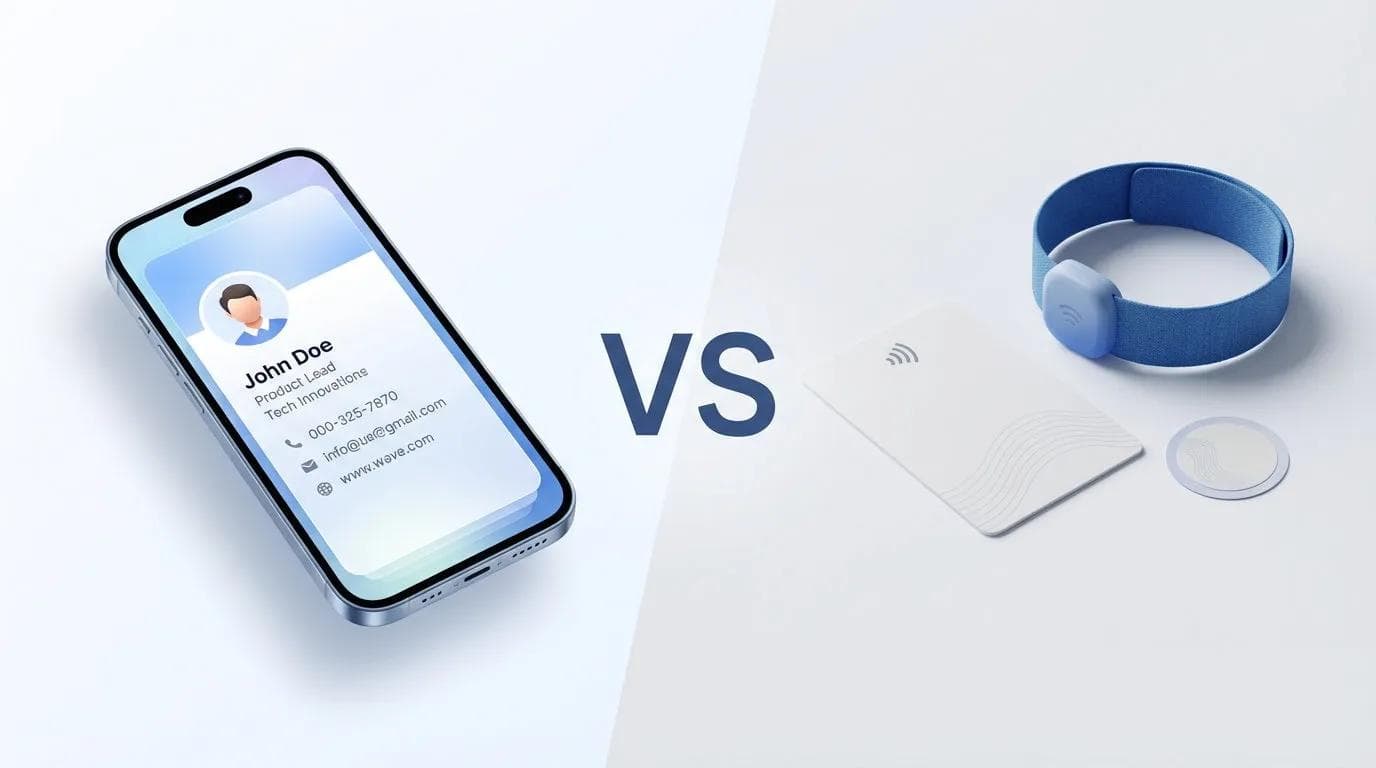
The fix isn't complicated, but it does require intention. Companies that equip their teams with digital contact exchange tools - whether that's badge scanners, event apps, or digital business cards - eliminate the manual entry bottleneck and can trigger CRM workflows the same day. When your team goes to an event with a system in place, that $112 lead actually has a chance of becoming a $20,000 deal instead of a sticky note that ends up in a drawer.
The stat that sticks with me: companies that follow up within 24 hours see 3x the pipeline value. That's not a technology stat - it's a process stat. The technology just makes the process possible at speed.
Frequently Asked Questions
What is the average ROI of event marketing?
Trade shows deliver an average of $20.98 for every $1 spent, according to CEIR. 52% of business leaders say events provide the greatest ROI of any marketing channel.
How much do companies spend on event marketing?
Companies allocate an average of 31.6% of their marketing budget to events and trade shows. A mid-size exhibitor typically spends $10,000-$30,000 per show including booth, travel, and logistics.
What percentage of marketing budgets go to events?
Events now account for 24-31.6% of total marketing budgets, making them the single largest channel allocation. 67% of event professionals expect this spend to increase in 2026.
Are in-person events more effective than virtual events?
Yes - 97.4% of event professionals rate in-person events as important, and 80% of attendees prefer them over virtual. Only 12% of marketers feel very effective at running virtual events.
How many trade shows are held in the US each year?
More than 13,000 trade shows are held annually in the United States, according to CEIR. The US events market is worth $466 billion as of 2025.
What is the average cost per lead at an event?
The average cost per lead at a trade show is $112, compared to $259 for field sales calls. Events rank as the second most effective lead generation tactic after company websites.
How has AI changed event marketing in 2026?
95% of organizers expect AI use in events to increase, with 62% already using AI for event marketing content and targeting. AI is primarily being adopted for email sequences, attendee matchmaking, and data analysis.
Stop Losing Leads After Events
Equip your team with digital business cards that capture contacts instantly - no app required. Automatic CRM sync, real-time analytics, and bulk deployment for your entire team.
Explore Wave for TeamsAbout the Author: George El-Hage is the Founder of Wave Connect, an event lead capture platform with a full digital business card built in, serving 200,000+ professionals worldwide. Since 2020, George has helped teams across industries transition from paper cards to digital contact exchange at events and trade shows. Connect with him on LinkedIn.