George El-Hage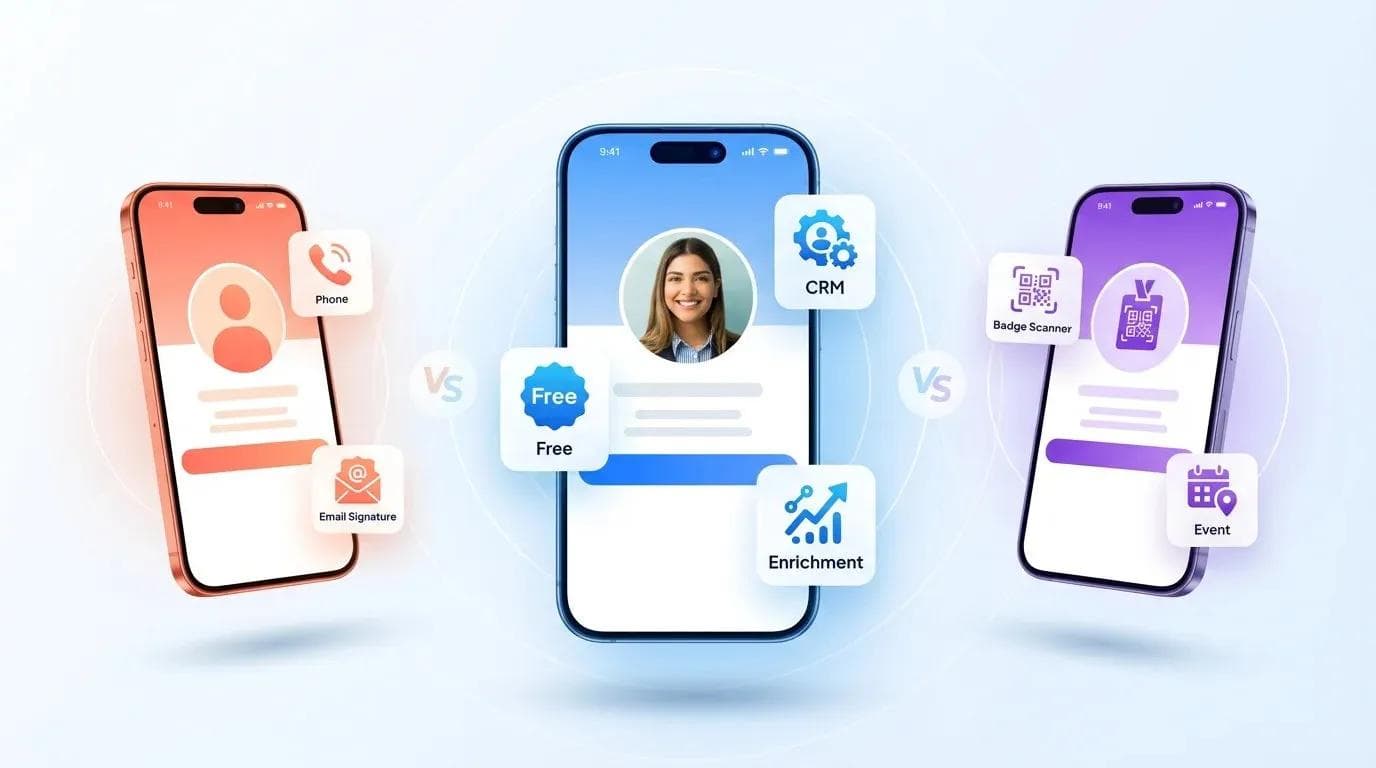
If you're comparing Blinq vs Popl, here's the first thing to get straight: you're comparing two products, not one. Both companies sell a digital business card platform AND an event lead capture product for scanning badges at trade shows. The right winner depends on which product you're actually buying, and there's a third option worth adding to the shortlist.
I'm George, founder of Wave Connect. Yes, I'm biased. But I've also purchased Blinq and Popl products, tested every plan tier I could access, and run all three platforms at real trade shows and conferences. I'll tell you where Blinq genuinely wins, where Popl genuinely wins, and why I think most teams are better off with the platform neither of those comparison articles mentions.
Blinq is the polish pick for digital business cards, with published seat pricing and a deep HRIS library. Popl has gone all-in on event lead capture, but publishes no pricing at all: every plan is a sales quote. Wave Connect keeps both products simple: card seats at $5/user/mo, and event lead capture priced per lead, not per user or per event (a badge scan is 4 credits, or $10, with volume pricing through sales), with nothing charged when enrichment fails.
- Where Blinq wins: HRIS-driven card provisioning and the best email signature builder in the industry
- Where Popl wins: event-first design, offline scanning, and quote-based license plans with no per-lead metering
- Where Wave Connect wins: pay-per-lead event lead capture with no per-user fees, and nothing charged on failed enrichment
- The real pricing math: what you can actually compare when one of the three vendors won't publish a number
- My recommendation: which platform fits, product by product
At a Glance: Blinq vs Popl vs Wave Connect (2026)
All three platforms sell both products, but they price them completely differently. Blinq publishes seat prices and charges $9.99 per captured lead on top. Popl publishes nothing and quotes a custom license. Wave Connect prices cards per seat and events per lead, with no per-user fees on the event side. The table below splits the comparison by product so you can scan the half you actually care about.
| Feature | Blinq | Popl | Wave Connect |
|---|---|---|---|
| Digital business cards | |||
| Free Plan | 2 cards, "Powered by Blinq", no export | 1 card via their app | 1 card, analytics, export |
| Individual Pro | $9.99/mo ($7.33/mo annual) | Not published | $7/mo |
| Team Seats | $4.99/user/mo annual ($6.99 monthly, min 5) | Not published (quote only) | $5/user/mo ($60/yr, no minimum) |
| Analytics | Paid plans | Paid plans (pricing unpublished) | ✅ FREE |
| Contact Export | Premium ($9.99/mo) | Paid plans (pricing unpublished) | ✅ FREE |
| Recipient Solicitation | Pop-ups + prompts | Pop-ups + prompts | ✅ None |
| App Required | Yes (app-first) | Yes (app-focused) | No (browser-based) |
| NFC Cards | Plastic only | Various NFC products | Metal engraved |
| HRIS / Directory | Deep HRIS library | AD, Entra ID, Google | AD, SCIM, HRIS |
| Event lead capture | |||
| Pricing model | $9.99 per captured + enriched lead, on top of seats | Custom license quote; no published rates | 4 credits ($10) per badge scan, enriched lead included; volume pricing through sales |
| Per-user fee for lead capture | Business seat per rep (min 5) | None (license covers team, per their FAQ) | None. Unlimited Users |
| Failed enrichment | 0.75 credit (about $7.49) | Not published | No charge 🏆 |
| Badge scanning at any show | ✅ Universal Scanner (their name) | ✅ Universal Badge Scanner (their name) | ✅ AI Badge Scanner, no badge kit needed |
| SOC 2 | Type II (listed on Enterprise) | Type 2 (stated) | ✅ Certified Type II |
Prices and features verified on blinq.me/pricing, Blinq's lead capture help article, and popl.co/pricing on August 12, 2026.
How I Tested This
I've used all three platforms with real teams in real networking scenarios. Wave Connect as its founder (biased, yes). Blinq and Popl because I buy competitor products and test them at the same events where I use Wave Connect. I've had active paid accounts on both platforms and tested their scanning, CRM sync, and team features firsthand. Every price in this post was re-verified against the vendors' live pages on August 12, 2026.
What I looked at:
- Free plan reality: what can you actually do before hitting a paywall?
- Scanning and enrichment: how does each platform capture and enrich a badge?
- CRM sync: does it work, and what does it actually cost?
- Team deployment: admin controls, trial availability, onboarding friction
- Pricing transparency: can you budget an event season without a sales call?
Where Blinq Wins (Honest Assessment)
Blinq is a polished, Apple-like platform with genuine enterprise strengths. By their own count they have millions of professionals on the platform, and some of their features deserve real credit. Here's where Blinq genuinely shines:
Deep HRIS Integration Library
This is Blinq's biggest technical advantage. If your company runs BambooHR, Workday, ADP, or one of the many other HR platforms Blinq integrates with, provisioning digital business cards becomes automatic. Employee joins the company, card gets created. Employee leaves, card gets deactivated. For IT teams managing hundreds of employees, that kind of automation saves serious time.
Best-in-Class Email Signature Builder
I'll say it plainly: Blinq has the best email signature builder in the digital business card space. If email signatures are a primary concern for your deployment, Blinq's builder is more polished than what Wave Connect or Popl offers today. It's a genuine strength. For more on how email signatures fit into digital business card strategy, see our email signature guide.
Sleek App Design
Blinq's mobile app feels premium. The in-app photo editing, logo placement, and card customization are smooth and intuitive. If your team lives inside a mobile app and you want a polished experience, Blinq delivers on design. For a deeper head-to-head breakdown, check our Wave Connect vs Blinq comparison. Or if you're exploring all alternatives to Blinq beyond just Popl, we've ranked the top 6 options.
Published Pricing (Unlike Popl)
Credit where it's due: Blinq publishes its seat prices, and its lead capture rate lives in a public help center article. You can budget a Blinq deployment without booking a demo. In this three-way comparison, that puts them a step ahead of Popl on transparency.
💡 From my experience: I used Blinq's app at a tech conference last year and the card-sharing experience was genuinely smooth. The app opens fast, the QR code renders instantly, and the recipient profile looks professional. Where I ran into friction was after the event: on their current model, every captured and enriched lead bills $9.99 on top of the seats, in arrears at the end of the month. The product is good. You just need to know the meter is running.
Where Popl Wins (Honest Assessment)
Popl has repositioned itself as an event lead capture platform first, and the event focus shows. If your team does 10+ trade shows a year, Popl has built real credibility, with Fortune 500 logos on their site and a large G2 review base. Here's where they win:
Event-First Product Design
Popl's whole flow is built around the trade show floor: event campaigns, qualifying questions, lead ownership routing, and attribution reports per event. Their badge scanner reads the printed name and company on a badge, so it works even at shows with encrypted QR codes, and their AI enrichment fills in the contact. See how the broader field compares in our best digital business cards for events guide.
Offline Scanning
Popl's scanner works offline and syncs when you're back on WiFi, with enrichment running automatically once service is restored. Conference WiFi is notoriously unreliable, so this matters. (For the record, Wave Connect has Offline Mode too, so I'd call this one a tie between us; against platforms without it, it's a real advantage.)
License Pricing With No Per-Lead Metering
Popl's FAQ says their plans have no credit system, no per-seat charges, and no consumption fees: one custom quote covers the team. For very high-volume teams that scan tens of thousands of badges a year, a flat license can genuinely beat per-lead pricing. The trade-off is you can't see the number without a sales call, and at small and mid volumes a flat platform fee usually costs more than paying for the leads you actually capture.
Broad Self-Serve Integrations
Popl lists native integrations with Salesforce, HubSpot, Marketo, Microsoft Dynamics, Zoho, Monday.com, Slack and more, with custom field mapping and lead routing. That's a wide net. For a full breakdown, see our Popl vs Wave Connect comparison, or browse all the top alternatives to Popl ranked for 2026.
💡 From my experience: Popl's event features are legitimately strong, and their badge scanner worked well when I tested it. My issue is the opacity. As of August 2026 their pricing page publishes no numbers at all; even their own FAQ says they quote pricing "over a meeting instead of publishing it on our website." Prospects who've shared Popl quotes with us have described per-lead economics around $10 at mid volumes. That's secondhand, so treat it as a data point, not their official price. But it means you can't comparison-shop Popl without giving up an hour to a demo.
Where Wave Connect Wins: Pay Per Lead, Nothing Stacked on Top
Wave Connect's advantage is simple: on the event side you only pay for the leads you capture, with no per-user fees stacked underneath. Every scan becomes an enriched, CRM-ready lead: verified email, phone, LinkedIn profile, company details, synced to your CRM. No per-user fee for lead capture, and nothing charged when enrichment fails.
Event Lead Capture, Priced Per Lead
Wave Connect's AI Badge Scanner reads the name and company printed on any badge, plus paper cards, QR codes, and LinkedIn QR codes, with no organizer badge kit required. Behind every scan runs Waterfall Lead Enrichment: multiple enrichment providers plus AI search, not a single data source. The model is simple: 1 credit is $2.50, a badge scan is 4 credits ($10) with the enriched lead included, and volume pricing comes through sales. Blinq charges $9.99 per lead on top of per-user seats. Popl quotes a custom license.
No Per-User Fees for the Event Team
Unlimited Users means your whole team scans from one shared lead pool. Blinq needs a Business seat for every scanning rep before the first lead bills. Popl's license covers the team, but you won't know what it costs until they quote you.
CRM Sync With Custom Mapping, No Separate Charge
Wave Connect syncs enriched leads to Salesforce, HubSpot, Dynamics 365, and Zoho with custom field mapping, and the sync carries no separate charge. Blinq's exports are also free on their current model, to be fair. Popl's sync is part of the license.
Zero Recipient Solicitation
Both Blinq and Popl add "Powered by" branding to free cards and prompt your recipients to create their own accounts, turning your professional contacts into their marketing leads. Wave Connect doesn't do any of that. Your recipient sees your card, saves your contact, and that's it. For B2B teams, this is a dealbreaker. For more on how digital business cards work for teams, see our full guide.
Browser-Based (No App Required)
Blinq is app-first. Popl is app-focused. Wave Connect is browser-based. Recipients don't need to download anything: they tap or scan and your card opens in their browser. For team deployments, this removes the biggest adoption barrier, which is getting people to actually install an app.
Let's Do the Math
Here's what you can actually compare at list rates, as of August 12, 2026. Popl isn't in the table because they publish no rates to compare:
| Wave Connect | Blinq (published rate) | |
|---|---|---|
| 100 leads | $1,000 | $999 + Business seats |
| 500 leads | No seat fees; volume pricing through sales | $4,995 + Business seats |
| 1,500 leads | No seat fees; volume pricing through sales | $14,985 + Business seats |
At 100 leads it's honestly a wash on the per-lead line; the seats are the difference. At 500 and 1,500 leads, Blinq's per-user seats keep adding up, while Wave Connect has none and offers volume pricing through sales. Blinq also offers unpublished bulk discounts through their sales team. According to Blinq's own help articles (October 2026), Blinq bills 0.75 of a credit (about $7.49) for a lead it can't add an email or phone to, including when enrichment comes up empty. Wave Connect charges $0 when enrichment fails.
💡 From my experience: I ran Wave Connect and Blinq side by side at the same conference booth. Same team, same event. The Wave Connect reps scanned badges all day and every enriched lead landed in the CRM at a rate we knew before we walked in. That predictability is the whole point: event budgets get approved before the event, not after the arrears invoice shows up.
Pricing Breakdown: The Real Cost (August 2026)
Here's each platform's current published pricing, product by product. Where a vendor doesn't publish a number, the table says so; that opacity is itself useful information when you're comparison shopping.
| Blinq | Popl | Wave Connect | |
|---|---|---|---|
| Free Plan | 2 cards, "Powered by Blinq", no export | 1 card via their app | 1 card, analytics, export |
| Individual Pro | $9.99/mo ($7.33/mo annual) | Not published | $7/mo |
| Teams (per user) | $4.99/user/mo annual, $6.99 monthly (min 5) | Not published (quote only) | $60/user/yr (no minimum) |
| Teams (100+ users) | Custom (Enterprise) | Not published (quote only) | Custom volume pricing |
| Event lead capture | $9.99 per captured + enriched lead, on top of seats | Custom license quote | 4 credits ($10) per badge scan; volume pricing through sales |
| Failed enrichment | 0.75 credit (about $7.49) | Not published | No charge |
| CRM sync | Free (all export methods) | Included in license | No separate charge (Salesforce, HubSpot, Dynamics 365, Zoho) |
| Free trial | 30-day Business trial | Demo only | ✅ Free, plus free trial leads |
The bottom line on pricing: Blinq is transparent on seats and their per-lead rate, with the gotchas living in the details (per-user seats before you scan, 0.75 of a credit, about $7.49, on leads it can't add an email or phone to, arrears billing). Popl publishes nothing, which makes direct comparison impossible without a demo. Wave Connect keeps it simple: $60/user/year for card seats, and event leads at 4 credits ($10) per badge scan with the enriched lead included, volume pricing through sales and the whole team included. For more on how the platforms stack up, check our best digital business card roundup and our best lead capture tools for trade shows ranking.
Who Should Choose What
None of these platforms is universally "best". They're built for different priorities, and the answer can change depending on which product you're buying. Here's my honest recommendation based on testing all three:
Choose Blinq If You:
- Provision cards through your HR stack: if automated provisioning through BambooHR, Workday, or ADP is a must-have, Blinq's HRIS library is the strongest here
- Prioritize email signatures: Blinq's signature builder is the best in the space. If email signature deployment is your primary use case, start here
- Want a polished app experience: Blinq's mobile app is genuinely well-designed with in-app photo editing and smooth card sharing
- Scan occasionally, not at scale: if your event volume is a handful of leads per show, $9.99 per lead on top of seats you already pay for is manageable
Choose Popl If You:
- Live at trade shows at very high volume: a flat license with no per-lead metering can win when your scan counts are huge; get the quote and do the math against per-lead rates
- Want event campaigns and attribution built in: their per-event reporting and qualifying questions are purpose-built for event marketing teams
- Need a wide integration net: Salesforce, HubSpot, Marketo, Dynamics, Zoho, Monday.com and more, self-serve
- Don't mind a sales process: every Popl plan starts with a demo and a custom quote
Choose Wave Connect If You:
- Want predictable pricing: flat card seats and a per-lead event rate (4 credits, or $10, per badge scan at list, with volume pricing through sales)
- Pay only for the leads you capture: no per-user fee for lead capture, one shared pool for the whole team, and nothing charged when enrichment fails
- Care about professionalism: zero recipient solicitation means your contacts don't get spammed after receiving your card
- Want to test before committing: free trial leads, no user minimum
- Need a no-app experience: browser-based means higher team adoption with zero IT friction
💡 My honest take: If someone forced me to recommend just one platform for a B2B team that does events, it's Wave Connect. Not because I built it (okay, partly because I built it), but because the whole team scans without per-seat fees, you know your per-lead rate before the event, and a failed enrichment costs nothing. Blinq wins on HRIS depth and signatures. Popl wins on event-marketing tooling and high-volume licenses. Wave Connect wins on giving you the most for the least. For more comparisons in this space, see our Wave Connect vs HiHello breakdown.
Frequently Asked Questions
Is there a free alternative to Blinq and Popl?
Yes. Wave Connect offers a free plan with analytics and contact export, plus free trial leads to try event lead capture. Blinq and Popl both gate comparable features behind paid plans.
How much does Blinq's lead capture cost?
As of October 2026, Blinq charges $9.99 per captured and enriched lead, on top of per-user Business seats, billed monthly in arrears. According to Blinq's own help articles (October 2026), Blinq bills 0.75 of a credit (about $7.49) for a lead it can't add an email or phone to, including when enrichment comes up empty. Wave Connect charges $0 when enrichment fails. Bulk and unlimited packages are quoted by their sales team.
How much does Popl cost?
Popl doesn't publish pricing: every plan is a custom quote delivered in a sales meeting. Their FAQ describes license plans with no per-seat or per-lead metering, which favors very high-volume teams.
How much does Wave Connect's event lead capture cost?
You only pay for the leads you capture: a badge lead costs 4 credits ($10) with enrichment and CRM sync included, a lead form, business card or LinkedIn QR code costs 1 credit ($2.50), and teams buying in volume can contact sales for bulk pricing. There are no per-user fees, and a failed enrichment costs nothing.
Which platform is best for trade shows?
All three scan badges at any show; the difference is pricing structure. Popl sells a quote-only license, Blinq bills $9.99 per lead on top of seats, and Wave Connect charges 4 credits ($10) per badge scan, with volume pricing through sales and the whole team included.
Do Blinq and Popl contact my recipients?
Both add "Powered by" branding on free cards and prompt your recipients to create their own accounts. Wave Connect doesn't solicit your recipients at all.
Can I try these platforms before paying?
Wave Connect offers a free plan plus free trial leads, and Blinq offers a 30-day Business trial. Popl requires a demo call; there's no self-serve team trial.
Which has better HRIS integrations?
Blinq leads on HRIS breadth, with a deep library including BambooHR, Workday, and ADP. Popl supports Active Directory and Entra ID. Wave Connect supports AD, SCIM, and HRIS connections.
Is Blinq or Popl better for teams?
Blinq is better for HRIS-heavy card deployments with published seat pricing. Popl is better for event marketing teams that want campaigns and attribution built in. Wave Connect offers a third path: flat card seats and pay-per-lead event capture with no per-user fees.
Which platform is SOC 2 certified?
Wave Connect holds SOC 2 Type II certification. Blinq lists SOC 2 Type II on its Enterprise plan, and Popl states SOC 2 Type 2 compliance. Ask any vendor for their current report during procurement.
Pay Only for the Leads You Capture. Try Wave Connect.
Flat card seats. Event leads at 4 credits ($10) per badge scan with the enriched lead included, volume pricing through sales, no per-user fees and nothing charged when enrichment fails. Start with free trial leads.
Try Wave Connect FreeAbout the Author: George El-Hage is the Founder of Wave Connect, an event lead capture platform with an AI badge scanner, waterfall enrichment, and CRM sync, plus a full digital business card built in, serving 200,000+ professionals worldwide. With 6+ years helping organizations turn in-person meetings into pipeline, George has deep expertise in what makes digital business cards and event lead capture successful for individuals and teams. Wave Connect is SOC 2 Type II compliant and integrates with leading CRM platforms like Salesforce, HubSpot, and Pipedrive.